Email candidates from one Join inbox. Pre-written templates, merge fields, scheduled sends, and reply-to forwarding so the next status update never gets missed.
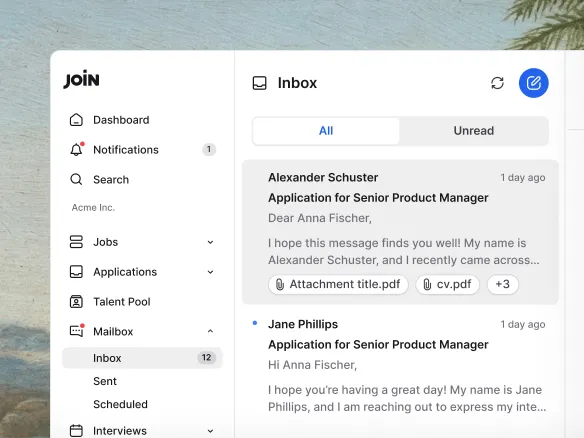
Every candidate conversation sits in one thread on the profile. When the candidate replies, Join forwards the reply to your own work email so you can answer from there. The reply syncs back to the candidate profile automatically, so the team always has context.
Every conversation in one thread on the candidate profile
Candidate replies forwarded to your work email automatically
Replies sync back to the profile so the team always has context
02
Templates that feel personal.
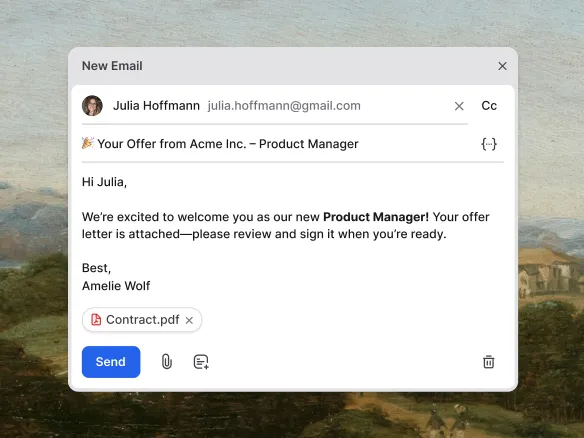
Pre-write the 'next round' invite, the rejection, the offer follow-up. Merge fields like {first_name}, {role}, and {interview_date} pull from the candidate record, so every send reads as an individual note. Save the templates your team uses most; tweak inline before you hit send.
Merge fields pull name, role, and dates from the candidate record
Save the templates your team sends most often
Tweak inline before hitting send, no template lock-in
03
Schedule the email for when it lands best.
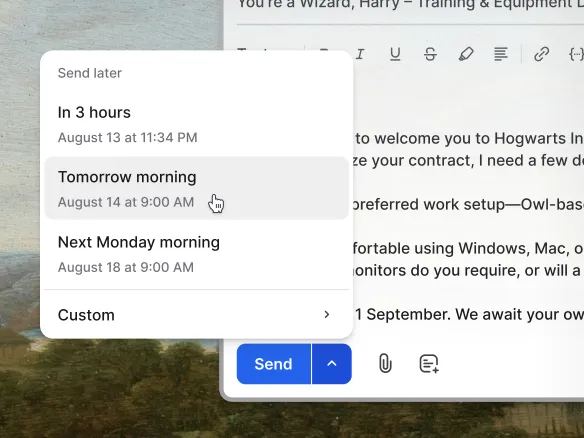
Drafting the rejection at 11pm? Schedule it to send Tuesday at 10am, when the candidate is more likely to read it without it derailing their evening. Same for the next-round invite. The send queue is visible per candidate; cancel or reschedule any time before the email goes out.
Schedule sends days in advance, down to the hour
Cancel or reschedule any time before delivery
Send queue visible per candidate, no blind spots
What customers say about Join.Recruiters and hiring managers who use it.
“From candidate communications to interview scheduling, I now do everything in Join. It saves me up to 80% of the time I used to spend on recruiting”
Gianluca SordanoCo-founder and CEO, Always FridayRead the story
“I don't have to send all these emails anymore, not the rejection emails, not the confirmation emails, not the interview reminders. Join just handles it. I can fully focus on finding the best talent.”
Fanny PineauRecruitment Manager, Holland BikesRead the story
“Candidates get much more information about where they stand. It doesn't just disappear into nothing.”
Josephine StresiusRecruiting Lead, MARTENS & PRAHL GruppeRead the story
Candidate communication FAQ
Where does a candidate's reply arrive?
Join forwards it to your normal work inbox and files it in the conversation on their profile at the same time. You keep working from the inbox you already use, without the rest of the hiring team losing the thread.
Can I edit an email template before it goes out?
Yes. A template is a starting point. You can change the wording and the merge fields before every send, then send straight away or schedule it for later.
Which candidate data belongs in a template?
Only what the message actually needs: name, role, appointment. That follows the data minimisation principle in Article 5 of the GDPR. Purpose, lawful basis and retention stay your organisation's decision.
Does an automated message decide who moves forward?
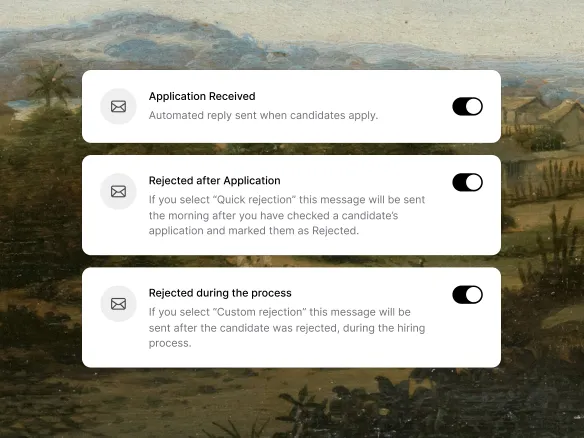
No. A rule only fires on a stage change your team makes, and only on the message you wrote for that stage. It will not move anyone, and it will not write anything you have not approved.