
Google for Jobs
Vacancy visibility inside Google Search results
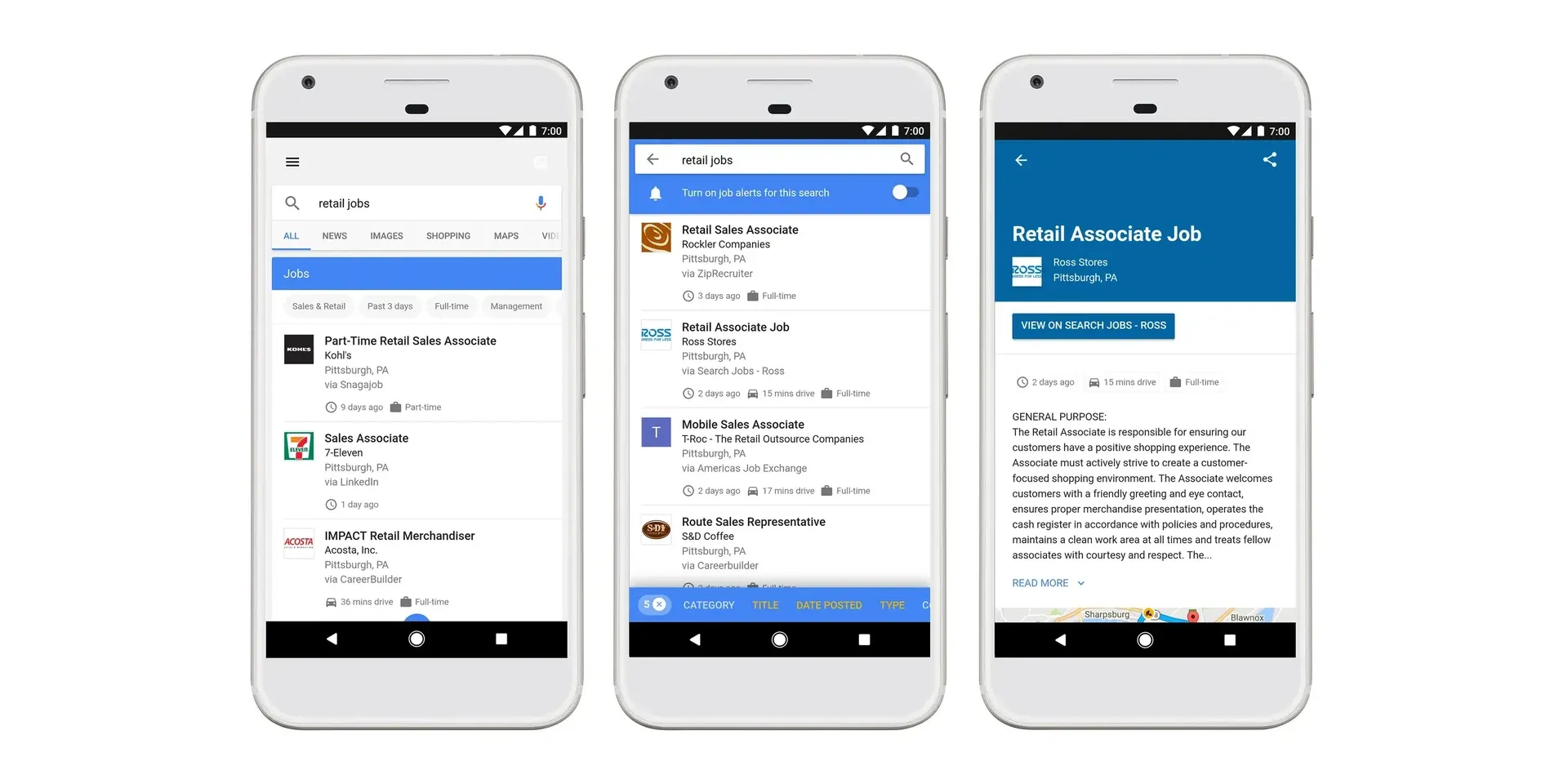
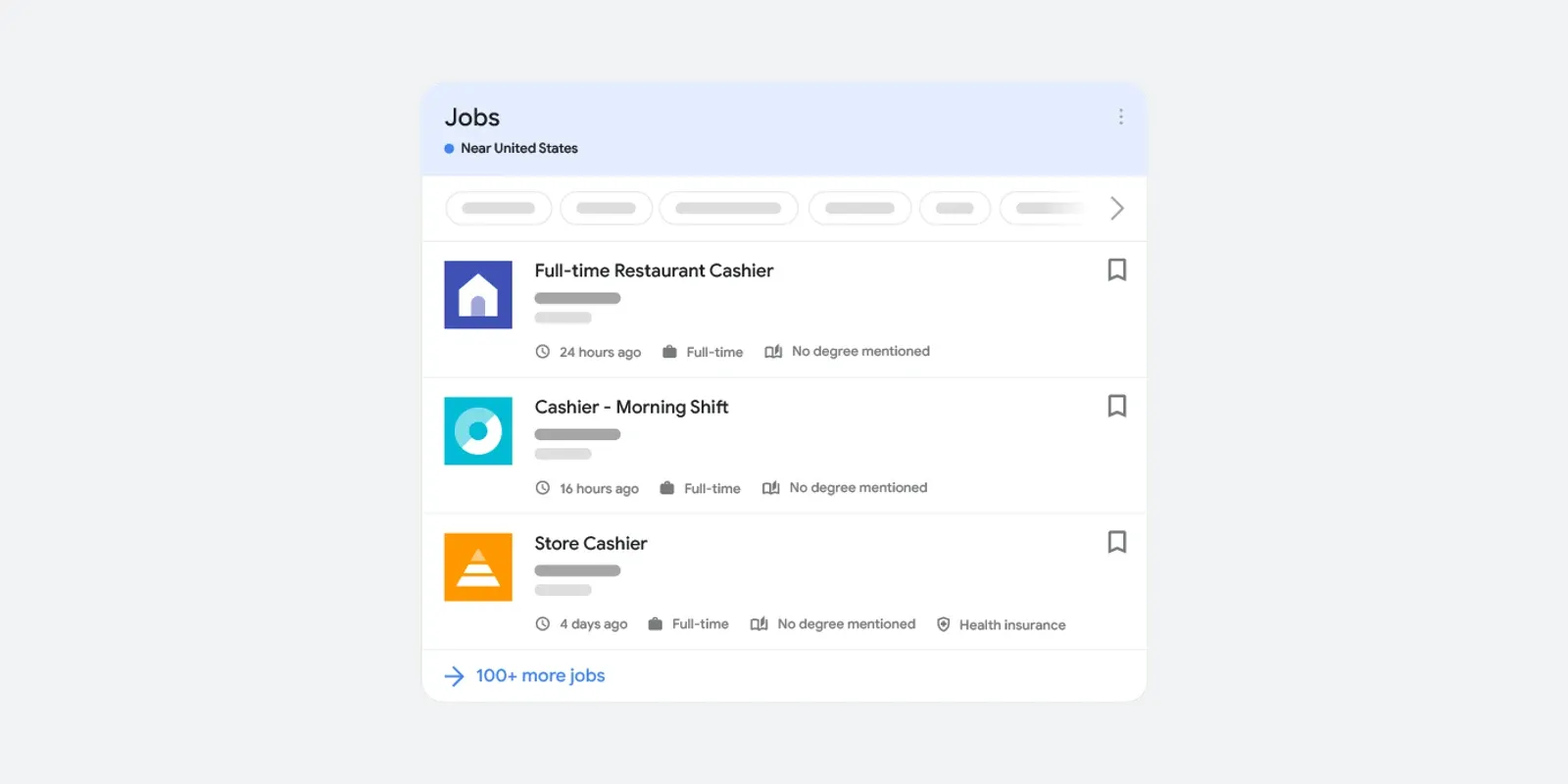
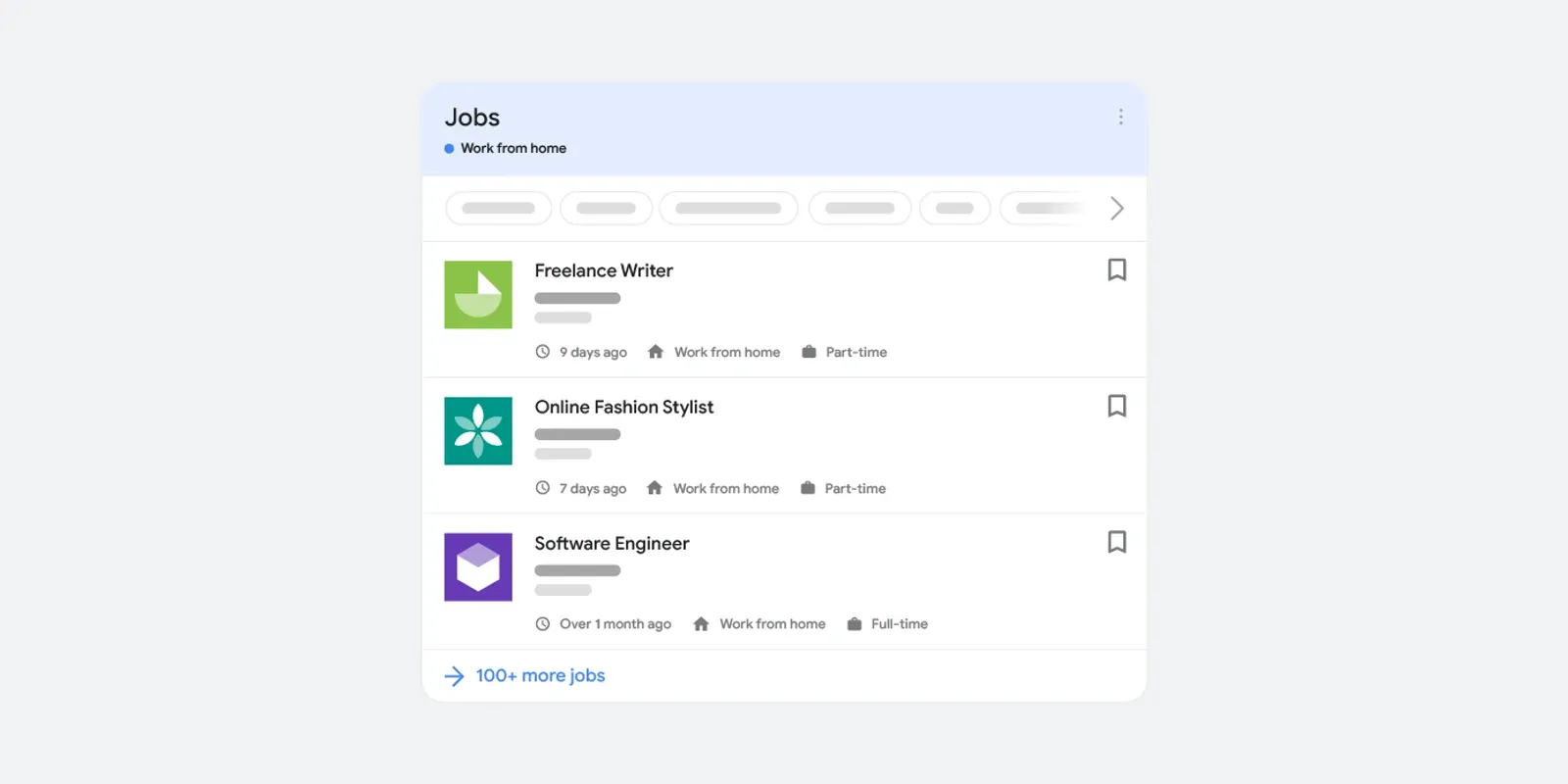
Images: Google
- Best for
- Everyday roles people search for by title and town: the trades, hospitality, customer support
- Less suitable for
- Senior or niche roles whose candidates are not searching, or whose job titles nobody types
About Google for Jobs
Rather than a job board, Google for Jobs is the jobs experience inside Google Search: a panel of vacancies drawn from job pages across the web. A role qualifies through the JobPosting structured data on its page. Its value to an employer is presence in the job searches that begin on Google instead of on any board.
Someone who searches Google for work, typically by typing a job title and a place, sees the jobs experience: a block of vacancies with filters, the employer's logo and job details, assembled for that search. Google lists it in markets including Germany, Austria, Switzerland, France, Belgium, the Netherlands, Spain and the United Kingdom.
Google answers only the searches people actually make, so a senior specialist who is not looking, or a role with an in-house title nobody types, needs a channel that goes to the candidate. Add a professional network to reach people through their profile, and a paid national board when a salaried professional role needs more reach. Keep Google for Jobs running underneath either.
How to post a job on Google for Jobs
One account for Google for Jobs and every other hiring channel, your team and all applications.
Write your job ad
Write it once in Join; the same ad goes to Google for Jobs and every other channel you pick.
Publish to Google for Jobs
It goes to Google for Jobs by default, included in your Join plan. Applications come back to Join.
Google for Jobs job posting requirements
What the ad needs· 7
Complete structured job data
Eligibility depends on structured data: the job title, a complete description, the hiring organisation, the date posted, and either a location or an explicit remote scope.
The real work location
The ad states where the job really is, including any travel or relocation it involves.
Remote, hybrid or on-site, stated
The ad says whether the job is remote, hybrid or on-site; a fully remote role also names where candidates may be based.
A plain job title
The title is the name of the job as it would appear on a business card — no locations, keywords or slogans bolted on.
The job readable without logging in
Candidates have to be able to read the whole job and see a way to apply without signing in first.
Authorisation from the hiring company
Whoever posts must be authorised by the company doing the hiring, and able to answer for the role.
Filled roles taken down
Filled or withdrawn roles have to be taken down or marked expired. Leaving them live risks a manual penalty.
What to avoid· 6
Different roles in one ad
One ad, one role. Several hires for the same role are fine; different roles in one ad, or an open call for applications, are not.
Fees for candidates
Candidates may never be asked to pay a fee at any point in the process.
Posts that aren't a real vacancy
The post has to be a real, open vacancy: product promotion, paid courses, MLM, franchise or pyramid schemes and posts that harvest candidate data are taken off.
Keyword stuffing
Repeated keywords, competitor names or strings of job titles meant to climb the search results get the ad hidden.
Spam-style or careless writing
All caps, emoji, stacked punctuation, egregious typos or unfinished sentences count against the ad; write it in full, professional sentences.
Offensive or unlawful content
Offensive, explicit, defamatory or unlawful text or images are refused or taken down.