Startups & scaleups
How dsb built a structured hiring engine in one of Germany's fastest-growing markets
dsb's HR lead tracked candidates in a sales CRM. A year after switching to Join, 16 colleagues hire from one pipeline holding 5,700 applications.
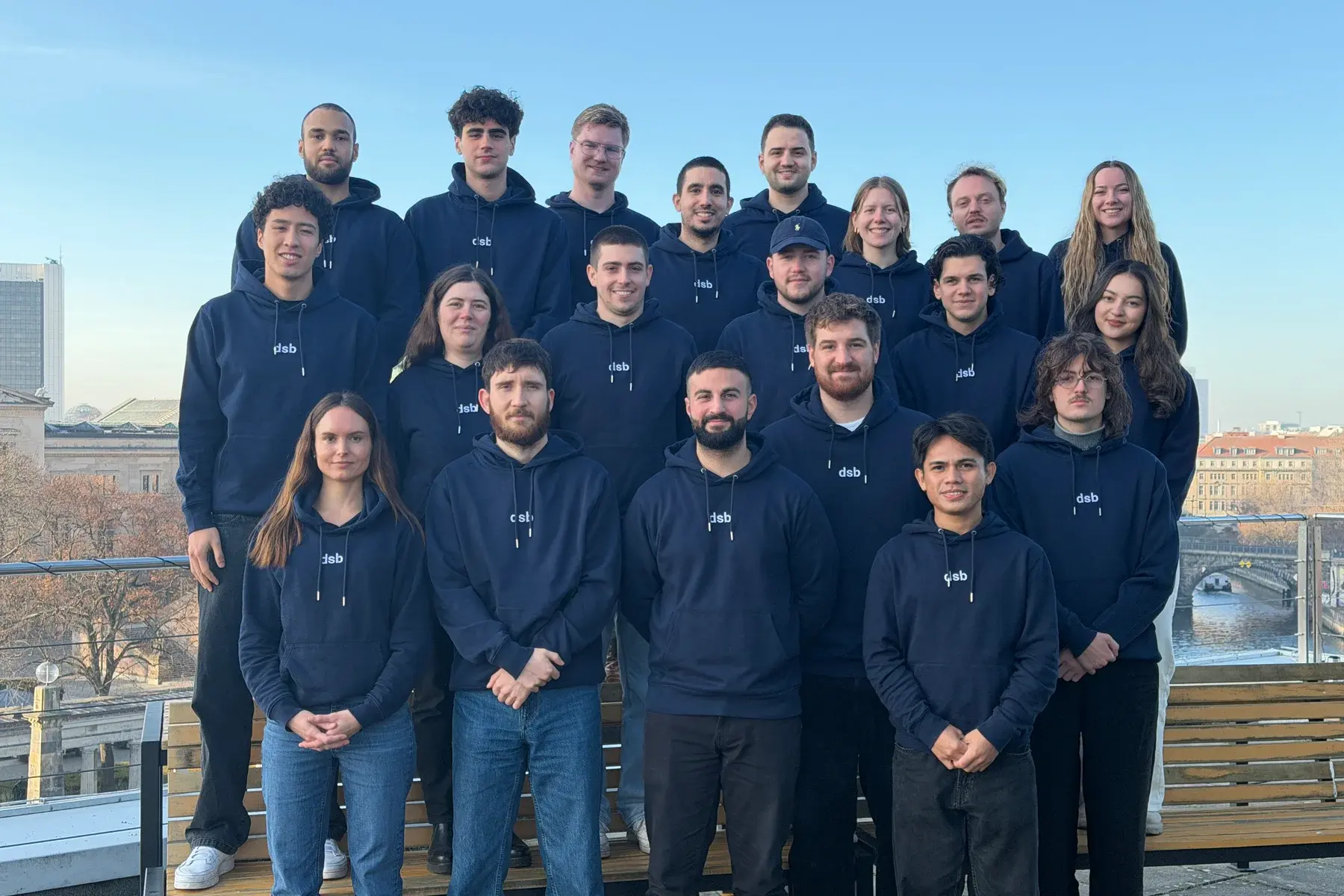
Structure matters. If you invest in it, you can give candidates a better experience, and that is what makes people want to join you.
- team members coordinating the process
- 16
- tools replaced by Join for every hire
- 3
- saved per week on admin tasks
- up to 2 hours
dsb Deutsche Sanierungsberatung GmbH had no ATS when Dana Morouj joined as HR Lead. Candidates were tracked in Pipedrive, a sales CRM, and CVs were shared via email and MS Teams messages. Within a year of switching to Join, dsb rebuilt their career page, launched paid multiposting campaigns within two days of signing up, and brought 16 team members, including founders and hiring managers, into a single permission-controlled recruiting pipeline.
The Challenge: No recruiting infrastructure in a market that never slows down
Germany’s energy renovation market is moving fast. The EU’s Renovation Wave Strategy has set a target of doubling the annual building renovation rate by 2030, and companies advising homeowners through that transition are among the clearest beneficiaries. Job postings tied to Germany’s energy transition have more than doubled since 2019, now representing close to 4% of all national job offers. For a company operating in that environment, the pressure to hire quickly, and hire well, is constant.
When Dana Morouj joined as dsb’s sole HR lead, the company needed to hire across an unusually wide range of profiles, with no recruiting infrastructure to do it. dsb advises homeowners on energy-efficient renovations, handling everything from planning to subsidy applications. To deliver that service, they hire architects, building engineers, energy consultants, telesales teams, project managers, key account managers, customer service staff, and venture development specialists. The breadth of those needs made the absence of a proper hiring system even harder to work around.
Candidates tracked in a tool not built for hiring. Before Join, dsb used Pipedrive, their customer CRM, as a makeshift applicant tracking system. Candidates applied through the company website, and Dana manually uploaded every application into Pipedrive one by one. There was no integration, no automation, no pipeline logic designed for recruitment. “Everything was completely inefficient,” Dana recalls. “It slowed my work down enormously, and sometimes candidates just weren’t logged properly because I simply didn’t have the time.” dsb also needed a tool with better controls around candidate data, with clear boundaries over who could access what.
One person coordinating multiple roles with no shared system. Dana was managing every active role simultaneously, with no ATS, no visibility into which candidates were at which stage, and no way to bring hiring managers into the process without handing over files manually. Coordinating feedback, scheduling interviews, and tracking progress was entirely manual. “I had no clear overview of the candidates and their progress. I had to remember everything myself.”
Reaching specialist talent across multiple platforms. dsb’s hiring needs are complex. Technical roles, including architects working as case processors and energy consultants with planning expertise, sit at the intersection of sustainability and administration, and don’t always attract obvious candidate pools. At the same time, the company’s Stepstone and Indeed accounts were managed separately, forcing Dana to log in and out of multiple platforms to post, monitor, and respond. There was no consolidated view of which channels were performing well and which weren’t.
“I couldn’t keep going using tools that were not built for hiring. I needed something dedicated to managing candidates properly, from the first application to the final decision.”
The Solution: A system built for recruiting, live within two days
Dana had discovered that a Join account had been set up at dsb previously but never fully activated. She logged in, explored the product, and the decision came quickly. The interface was intuitive, the setup was fast, and it was clearly built for exactly what she needed. “I saw that it actually worked pretty well, and said: let’s use Join. It just makes more sense.” She had the trust of the founders and the remit to act, so she did.
A proper system for tracking candidates
Dana’s first move was to set up a recruiting pipeline that could keep up with dsb’s hiring pace. With Join’s job widget on the company website, applications landed directly in one place, removing the need to upload CVs by hand or chase information across email and Teams. Since adopting Join, dsb has managed all 5,700 applications in a single system.
That structure also made it easier to involve the wider team without compromising privacy. Dana onboarded 16 team members and set access by role: hiring managers only see the positions they’re involved in, founders have broader visibility for reporting, and venture development analysts have admin-level access to track conversion rates and interview-to-hire ratios. The result is a shared pipeline with clear permissions and GDPR-safe candidate data across departments.
Efficient screening with knockout questions and email templates
With up to ten open roles at any given time and five to ten hires per month, Dana needed to move quickly without sacrificing quality. Knockout questions, added to job listings to filter candidates before they reach the review stage, became a key part of her workflow. Candidates who do not meet baseline requirements get filtered out automatically, letting Dana focus her time on relevant candidates.
Email templates for rejections, interview invitations, and status updates save Dana from rewriting the same messages dozens of times each week. The process moves faster without sacrificing quality. “Before, I invested more time in applications than I do now. I now spend that time where it actually matters.”
Multiposting across job boards, without the manual overhead
Before Join, dsb’s job board activity was managed platform by platform. With multiposting, Dana can publish a role once and distribute it across a curated set of boards in one go. The team tested it with a €500 pilot campaign, saw results quickly, and kept investing. Today, paid promotions run regularly, and applications come in from Indeed, LinkedIn, XING, Stepstone, and other channels dsb wasn’t actively managing. “Sometimes I see a platform I don’t even recognise, and someone has applied through it because of our jobs’ organic multiposting. That’s the point. Join allows you to organically reach people you wouldn’t have found otherwise.”
Access to source data also changed how dsb evaluates performance. Dana can see exactly where each application came from and use that insight to decide where to put the next campaign budget. The founders use the same data to track conversion rates and make budget decisions.
Interview scheduling that went from ten clicks to one
One feature that made the biggest immediate impression was interview scheduling within Join. Before this, Dana coordinated interviews by sending individual emails with calendar links. Now she books interviews directly within her ATS and sees all upcoming interviews on her dashboard in a single view.
“With interview scheduling in Join, what used to feel like ten clicks now feels closer to one. And because calendars sync in real time, we avoid almost a week of back-and-forth work.”
The Results: A hiring operation that scales with the company
Just a year after moving to Join, dsb has grown from roughly 100 to 145 employees and is actively working towards 200. The hiring infrastructure that supports that growth is now coordinated, transparent, and built to scale, something that was not true twelve months ago.
16 team members working from a single pipeline. Founders, analysts, and hiring managers across every department all now use Join with the right access levels. Feedback loops that previously required emails and Teams messages now happen inside dedicated candidate profiles. “We used to share CVs by email, which is neither efficient nor GDPR-friendly. Now everyone has exactly what they need, in the right place.” Adoption was quick across the hiring team, too. Dana introduced Join to each hiring manager in a ten-minute walkthrough, and most were able to start using it right away. “It’s so self-explanatory that I was surprised how little training it took.”
One to two hours saved every week by removing manual recruiting admin. Before Join, Dana had to upload applications into Pipedrive manually, share CVs through email and Teams, chase hiring-manager feedback, and coordinate interviews across separate tools. Now applications, candidate profiles, feedback, email templates, and interview scheduling sit in one workflow, saving her an estimated one to two hours every week while giving the team a much clearer view of what needs attention.
More reach from organic multiposting, without more platform admin. With organic multiposting, dsb can publish one job and have it distributed across 15 organic job platforms without creating separate accounts or switching between individual job-board websites. That gives every role broader reach with less manual work, including visibility on certain niche job boards. As a result, dsb reaches a larger and more diverse candidate pool, which Dana believes has improved candidate quality. “Before, candidates had to find us directly. Now we are where they already are.”
A candidate experience that reflects the company’s ambition. For Dana, a structured process is part of how candidates judge the company. In Join, pipeline stages show exactly who is at which step, who still needs a response, and where hiring-manager feedback is pending. With automated emails and clear next actions, the team can keep candidates moving. “If someone doesn’t hear back for three weeks, that says something about the company. The people joining you are your most important asset.”
“Join is genuinely enjoyable to use, which matters when you’re using it every day. Every new feature fits right into how we already work.”
dsb’s next step is expanding scorecard usage to standardise candidate evaluation across all active roles. With Join, Dana has a hiring process that can scale with dsb’s next stage of growth: more roles, more hiring stakeholders, and potentially new markets, without losing visibility or control.