1. Home
  2. Recruitment & HR Blog
  3. Hire talent
  4. Candidate management: 5 recruiting best practices for 2026

Organisational processes · 13 min read

Candidate management: 5 recruiting best practices for 2026

By Alana Barbosa · Published on

Table of contents

Candidate management brings structure to hiring by helping recruiters track, engage, and nurture candidates at every stage. Learn why it matters, the best practices for 2026, and how the right ATS helps teams hire faster while delivering a better candidate experience.

Every recruiter knows the frustration: a promising candidate goes silent, an interview gets double-booked, or a hiring manager asks about an application you cannot quite locate. These are not signs of a bad recruiter. They are symptoms of a candidate management process that is not working hard enough.

This guide covers what candidate management actually involves, why it matters, and the best practices that help recruitment teams bring structure and predictability to the hiring process.

Table of contents

What is candidate management

In simple terms, candidate management is how you engage, track, and nurture candidates, from the moment someone spots your job posting through to their first day at work. The process relies on technology, typically an Applicant Tracking System (ATS), to keep everything organised and moving forward.

At its heart, candidate management centres on three things: timely communication, streamlined processes, and relationship-building. When recruiters handle all three well, they attract better talent, fill roles faster, and leave candidates with a positive impression, even those who don’t get hired.


Why candidate management matters

The way you treat candidates during hiring directly shapes how they see your organisation. Here is what effective candidate management delivers:

  • Better candidate experience: Candidates feel respected and informed, even when they do not get the job.
  • Stronger employer brand: A smooth process attracts more candidates and improves your market reputation.
  • Faster hiring: When communication flows and nothing falls through the cracks, you secure top talent before competitors do.
  • A ready talent pipeline: Great candidates who are not right today can become perfect fits for tomorrow’s openings.

Poor candidate management often means losing qualified people simply because they felt ignored. A mistake with real consequences in competitive hiring markets.


Key parts of the candidate management process

Sourcing and attraction

Sourcing means identifying and engaging potential candidates through job boards, social media, employee referrals, and career sites. Multiposting (publishing a single job ad across dozens of job boards at once) can dramatically expand your reach without multiplying your workload.

Application tracking

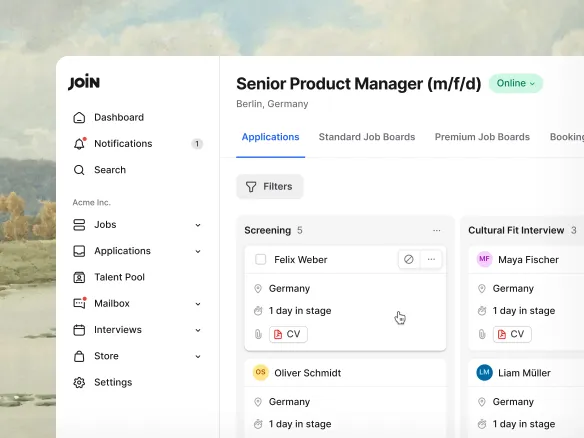
An ATS centralises all candidate data, screens resumes, and keeps workflows organised. Without it, recruiters juggle spreadsheets, email threads, and sticky notes. This might work with five applicants, but it quickly collapses at scale.

Communication and engagement

Candidates expect regular updates. When they hear nothing for weeks, most assume the worst and move on, with 65% of candidates reporting they have not received consistent communication. Automated messages can handle routine updates while recruiters focus on personal touchpoints that require a human voice.

Interview scheduling and assessment

Coordinating interviews across multiple calendars quickly becomes a logistical challenge, with around 35% of recruiters’ time spent on scheduling alone. Scheduling tools simplify the back-and-forth, while standardised scorecards help hiring teams compare candidates fairly and guard against bias.

Relationship nurturing

Not every qualified candidate fits the current role. Relationship nurturing means staying connected with promising people for future opportunities, turning one-time candidates into a long-term talent pool.

Offer management and onboarding

The final stage involves extending offers, handling negotiations, and transitioning new hires into onboarding. Delays or confusion here can cause accepted candidates to reconsider. 58% have turned down offers because of poor candidate experience.


Candidate management best practices for recruiters

Recruitment team collaborating around a laptop during candidate management, reviewing applicant data and discussing hiring decisions.


1. Centralise all candidate information

Keep all candidate data, notes, and communication history in one tool. When information lives in multiple places, details get lost and candidates receive inconsistent experiences. A single source of truth means everyone on the hiring team sees the same picture.

2. Automate routine communication

Templates and triggers can handle application confirmations, status updates, and interview reminders automatically. This frees recruiters to spend time on conversations that actually require a personal touch.

3. Personalise the candidate experience

Generic bulk emails signal that you are not paying attention. Tailoring messages based on the role, hiring stage, and candidate background makes a noticeable difference. Managing the candidate experience means treating applicants as individuals, not as numbers in a system.

4. Use structured evaluation criteria

Consistent scorecards and feedback forms reduce bias and make comparisons more objective. When everyone evaluates against the same criteria, hiring decisions become clearer and easier to defend.

5. Close the loop with timely feedback

Clear and timely feedback shows candidates that you value their time and effort, regardless of the outcome. It leaves a positive impression, strengthens your employer brand, and makes candidates more likely to reapply or recommend your company in the future.


How to choose the right candidate management system

Not all candidate management systems work the same way. Here is what to consider when evaluating your options.

Integration capabilities

Look for systems that connect with job boards, calendars, email, and HRIS tools. Seamless integrations reduce manual data entry and keep information flowing between software without extra effort.

Scalability and pricing

Consider whether the system grows with your hiring volume. Some tools offer free tiers that work well for smaller teams, with paid features available as you scale up.

Ease of use and adoption

A system that is easy to use will always beat one with more features. When the software feels complicated, recruiters stick to their old workflows rather than wasting time in endless training sessions. 


Build a better candidate management process with JOIN

JOIN brings everything covered in this article together in one intuitive recruiting tool, from pipeline management and candidate communication to collaborative hiring and multiposting to 250+ job boards.

Whether you are hiring for one role or scaling rapidly, JOIN helps your team stay organised, move faster, and deliver a better candidate experience. A free plan is available, so there is no barrier to getting started.


Candidate management in recruitment: 5 practical tips for recruiters

  • Centralise all candidate data in one system to avoid missed details and confusion
  • Automate routine communication to keep candidates informed without adding admin work
  • Personalise messages and touchpoints to improve candidate experience
  • Use structured evaluation criteria to support fair and consistent decisions
  • Close every process with timely feedback to strengthen your employer brand

Frequently Asked Questions

Candidates should receive confirmation after applying, updates at each key stage, and clear next steps after interviews. Weekly updates work well for active candidates. If delays occur, a short message explaining the timeline helps maintain trust.

Yes. Strong candidate management helps recruiters evaluate candidates properly instead of rushing decisions. Structured criteria reduce bias, clear communication attracts stronger applicants, and nurturing past candidates means you already know who is worth reconsidering.

Look for an ATS that centralises candidates, automates communication, supports collaborative hiring, and scales with your needs. JOIN combines all of this with multiposting to 250+ job boards and an intuitive interface that teams actually enjoy using.

Alana Barbosa

Alana Barbosa

Alana is a creative member of JOIN’s Marketing team. As a Junior Marketing Specialist, she focuses on crafting engaging and insightful content that supports recruiters and job seekers alike. With a strong interest in storytelling and talent acquisition topics, Alana produces articles that inform, inspire, and reflect JOIN’s mission to make hiring smarter.

Read more articles

Share this article

Related articles